Upgrade & Secure Your Future with DevOps, SRE, DevSecOps, MLOps!
We spend hours scrolling social media and waste money on things we forget, but won’t spend 30 minutes a day earning certifications that can change our lives.
Master in DevOps, SRE, DevSecOps & MLOps by DevOps School!
Learn from Guru Rajesh Kumar and double your salary in just one year.
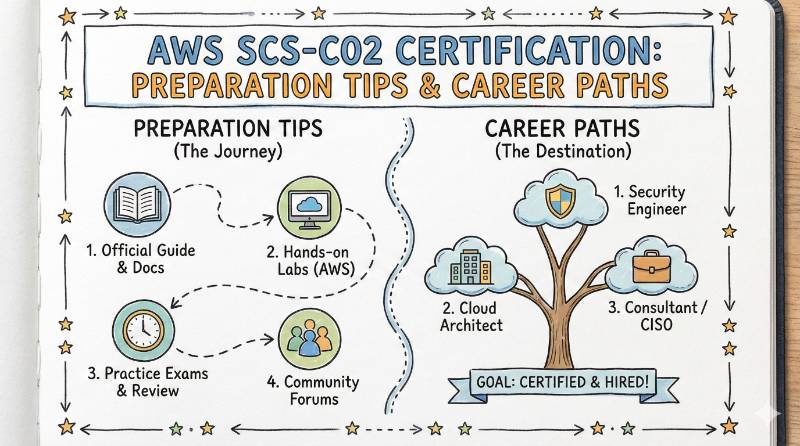
In the current tech climate, cloud security has shifted from being a specialized niche to a core requirement for every engineer. Whether you are leading a team in India or managing global infrastructure, the ability to build and defend secure environments is what separates a senior professional from the rest of the pack.
The AWS Certified Security Specialty (SCS-C02) is not just another badge for your profile. It is a rigorous validation of your ability to handle high-stakes security challenges. This guide focuses on why this certification is a strategic career move and how you can master it while balancing a full-time role.
The AWS Certification Ecosystem
Before focusing on security, it is vital to see where this specialty sits within the broader AWS learning journey. This table helps you map out your progression based on your current role and goals.
| Track | Level | Who it’s for | Prerequisites | Skills Covered | Recommended Order |
| Security | Specialty | Security Engineers, Cloud Pros | 2+ years AWS experience | IAM, Logging, Data Protection, Incident Response | After Associate |
| Solutions Architect | Associate | Software & Cloud Architects | None (Cloud Practitioner suggested) | High-level system design and cost optimization | 1st or 2nd |
| SysOps Administrator | Associate | System Admins, SREs | Foundational AWS knowledge | Operational excellence and troubleshooting | 2nd |
| Developer | Associate | Software Engineers | Basic AWS hands-on knowledge | Writing and deploying code on AWS | 1st or 2nd |
| DevOps Engineer | Professional | SREs, DevOps Leads | Associate-level knowledge | Automation, CI/CD, and governance | After Associate |
AWS Certified Security Specialty (SCS-C02) Training
What it is
The SCS-C02 is a deep-dive certification focused on the five major pillars of cloud security: Threat Detection, Logging and Monitoring, Infrastructure Security, Identity Management, and Data Protection. It moves past basic “how-to” guides and asks you to solve complex, real-world security puzzles. It proves that you can safeguard an organization’s most valuable assets in a cloud-native way.
Who should take it
This is a high-level program designed for those who have skin in the game.
- Security Professionals: Who need to translate their traditional security knowledge into the AWS Cloud environment.
- Cloud & Software Engineers: Who want to ensure their code and infrastructure are “secure by design.”
- Managers: Who need to lead security-conscious teams and understand the trade-offs between speed and safety.
- SREs and DevOps Pros: Who are responsible for the stability and integrity of production environments.
Skills you’ll gain
This training transforms how you view the cloud. You stop looking at services as just tools and start seeing them as parts of a secure perimeter.
- Identity Management (IAM): You will master the logic of complex policies, including how to handle cross-account access and how to implement “Least Privilege” without breaking your applications.
- Infrastructure Defense: You’ll learn to build multi-layered defenses using VPCs, Security Groups, Network ACLs, and Web Application Firewalls (WAF).
- Automated Auditing: You’ll gain the ability to use AWS Config and Security Hub to ensure your environment stays secure 24/7 without manual intervention.
- Advanced Encryption: You will understand how to manage encryption keys at scale using KMS and how to secure data in transit.
Real-world projects you should be able to do
The true value of the SCS-C02 is what you can build after the exam.
- Self-Healing Security Infrastructure: Create a system that detects an open S3 bucket and automatically closes it while alerting the security team in real-time.
- Hardened Multi-Account Architecture: Design an AWS Organizations setup where security logs from dozens of accounts are funneled into a single, unchangeable “Vault” account for auditing.
- Compliance at Scale: Build a CI/CD pipeline that automatically scans for security vulnerabilities before any code is allowed to reach production.
Preparation Plan
Success depends on consistency. Choose the timeline that fits your current workload:
- The 14-Day “Bootcamp” Style: Best for those already working in security. Spend 3-4 hours daily. Focus 20% on reading and 80% on high-quality practice exams and reviewing the official exam guide.
- The 30-Day “Professional” Path: The most popular choice for working engineers. Commit to 1 hour every morning and a 4-hour deep dive on weekends. Dedicate the first two weeks to labs and the last two weeks to mastering IAM policy logic and encryption.
- The 60-Day “Foundation” Path: If you are new to security or AWS, start here. Spend the first 30 days building small projects to understand how services talk to each other. Spend the second 30 days focusing on the specific “Security” domains of the exam.
Common Mistakes
Even experienced pros stumble on these areas. Avoid them by staying focused:
- Over-complicating IAM: Most failures happen because of a misunderstanding of how Identity-based policies interact with Resource-based policies.
- Neglecting CloudTrail and CloudWatch: Security is about visibility. If you don’t understand how to read a log file or set an alarm, you will struggle with the “Monitoring” section of the exam.
- Ignoring the “Small” Services: Many people focus only on IAM and S3 but forget about services like AWS Macie, GuardDuty, or Inspector. These carry significant weight in the SCS-C02.
Best Next Certification After This
After securing your environment, the most logical step is to master the automation of that environment. The AWS Certified DevOps Engineer – Professional is the perfect partner to the Security Specialty. It allows you to take your security knowledge and build it directly into the “pipes” of your software delivery, creating a true DevSecOps culture.
Choose Your Path: 6 Career Learning Paths
Cloud careers are no longer one-size-fits-all. Choose the path that matches your professional interests:
- DevOps Path: Associate Developer $\rightarrow$ Security Specialty $\rightarrow$ DevOps Engineer Professional. This creates an engineer who can build and secure automated systems.
- DevSecOps Path: Associate SysOps $\rightarrow$ Security Specialty $\rightarrow$ Advanced Networking Specialty. This is for the ultimate defender who manages the entire “Secure Pipeline.”
- SRE Path: Associate SysOps $\rightarrow$ Security Specialty $\rightarrow$ Professional DevOps Engineer. Focuses on the intersection of system reliability and data integrity.
- AIOps/MLOps Path: Cloud Practitioner $\rightarrow$ Machine Learning Specialty $\rightarrow$ Security Specialty. Ensures that AI models and training data are protected from theft or corruption.
- DataOps Path: Data Engineer Associate $\rightarrow$ Data Analytics Specialty $\rightarrow$ Security Specialty. A path for those managing massive data lakes that must comply with strict privacy laws.
- FinOps Path: Cloud Practitioner $\rightarrow$ Security Specialty $\rightarrow$ Certified FinOps Practitioner. This path links cloud spending with security, as unsecured resources often lead to “billing surprises.”
Role → Recommended Certifications Mapping
| If your role is… | Take this Primary Cert | Add this for extra impact |
| DevOps Engineer | DevOps Engineer Professional | Security Specialty |
| SRE | SysOps Admin Associate | Security Specialty |
| Platform Engineer | Solutions Architect Associate | Security Specialty |
| Cloud Engineer | Solutions Architect Professional | Security Specialty |
| Security Engineer | Security Specialty | Solutions Architect Associate |
| Data Engineer | Data Engineer Associate | Security Specialty |
| FinOps Practitioner | Cloud Practitioner | Security Specialty |
| Engineering Manager | Solutions Architect Associate | Security Specialty |
The Next Steps: Where to go after Security
Growth doesn’t stop with one specialty. Depending on your goals, consider these three directions:
- Same Track (Deep Specialization): AWS Certified Advanced Networking – Specialty. Security happens at the network layer. If you want to be a top-tier security architect, you must master networking.
- Cross-Track (The Modern Hybrid): AWS Certified Data Engineer – Associate. As organizations rely more on data, the person who knows how to move data safely is invaluable.
- Leadership (The Strategic Architect): AWS Certified Solutions Architect – Professional. This moves you from a “Specialist” to a “Generalist Expert” who can oversee the entire technical strategy of a company.
Top Training Institutions for SCS-C02
Quality training is the difference between passing on the first try and wasting time. Here are the top providers:
- DevOpsSchool: A powerhouse for professional training, DevOpsSchool offers hands-on, instructor-led courses that go beyond the exam syllabus. They focus on real-world engineering scenarios.
- Cotocus: They provide intensive bootcamps and specialized training programs designed to help engineers upskill quickly without sacrificing depth of knowledge.
- Scmgalaxy: A massive community platform that provides a wide range of free and paid resources, blogs, and tutorials for anyone in the DevOps and Security space.
- BestDevOps: Known for practical, “job-ready” training. Their courses help you understand how to use AWS tools in an actual production environment.
- Devsecopsschool: They are experts at teaching the “Shift Left” philosophy, making them the best choice if you specifically want to move into a DevSecOps role.
- Sreschool: Provides a unique focus on how security impacts system reliability. Ideal for those who view security as a key component of “uptime.”
- Aiopsschool: If you want to see how AI is changing security (and how to secure AI), this school offers cutting-edge curriculum in AIOps and MLOps security.
- Dataopsschool: Focuses on the security and management of data pipelines, which is a critical skill for modern data-driven companies.
- Finopsschool: Teaches you how to manage the cost of security and how to use security practices to optimize your cloud cloud budget.
General Career & Certification FAQs
- Is the SCS-C02 exam very hard?It is considered one of the more difficult AWS exams because it requires you to understand the “Evaluation Logic” of policies very deeply.
- How much time should I study every day?For a working professional, 1 to 2 hours is plenty, provided you are consistent and don’t skip days.
- Do I need an Associate cert first?It’s not a rule anymore, but skipping the Associate level usually makes the Specialty exam much harder to pass.
- Should I start with SysOps or Solutions Architect?The Solutions Architect Associate provides a broader view of AWS, which is generally more helpful for the Security exam.
- Is this certification recognized globally?Yes, AWS certifications are the industry standard worldwide, from startups in India to Fortune 500 companies in the US.
- Will this certification increase my salary?While it varies by region, security-specialized engineers generally command 15-25% higher salaries than generalist engineers.
- How do I recertify?You must retake the exam every three years to keep your certification active and up-to-date with new AWS features.
- Can I take the exam from home?Yes, AWS offers remote proctoring. You just need a quiet room, a webcam, and a stable internet connection.
- What is the passing mark?You need a score of 750 or higher.
- Does the exam have coding?You don’t need to write Java or Python, but you must be able to read and write JSON policies and understand basic Lambda logic.
- How long is the exam?The exam is 170 minutes long.
- Are there any prerequisites for the SCS-C02?There are no mandatory prerequisites, but AWS recommends two or more years of hands-on experience securing AWS workloads.
AWS Certified Security Specialty (SCS-C02) Specific FAQs
- What’s new in the SCS-C02 version?It places a much higher emphasis on automated response tools like Security Hub, GuardDuty, and modern compliance tools.
- Is KMS really that important for the exam?Yes. Encryption is a “Make or Break” topic. If you don’t understand how KMS keys work across regions, you will likely fail.
- What is the focus on Incident Response?The exam wants to know if you can identify a threat using GuardDuty and automatically fix it using Lambda or AWS Config.
- How much networking is on the exam?Quite a bit. You need to know how to secure a VPC using Flow Logs, Bastion Hosts, and PrivateLink.
- Does the exam cover S3 security?Yes, extensively. You must understand Bucket Policies, ACLs, Block Public Access, and Amazon Macie.
- Are there questions on AWS Organizations?Yes, specifically regarding Service Control Policies (SCPs) and how they can restrict what even a root user can do.
- Do I need to know about logging?CloudTrail is a central theme. You need to know how to ensure logs are not deleted and how to analyze them.
- What are the best practice tests?Look for tests that offer detailed explanations for why an answer is correct. Providers like DevOpsSchool offer excellent practice resources.
Conclusion
In an era where data is the most valuable currency, being the person who can protect it is the ultimate job security. The AWS Certified Security Specialty (SCS-C02) training is more than just preparation for a test; it is a mental shift. It teaches you to build with caution, to monitor with precision, and to respond with speed. For engineers and managers alike, this certification provides the technical vocabulary and the practical skills to lead in a cloud-first world. Whether you are aiming to secure your current role or looking to leap into a new one, the journey through the SCS-C02 curriculum will make you a more thoughtful, capable, and respected professional. By committing to a structured plan and leveraging the right training partners, you aren’t just earning a certificate—you are building a future-proof career.